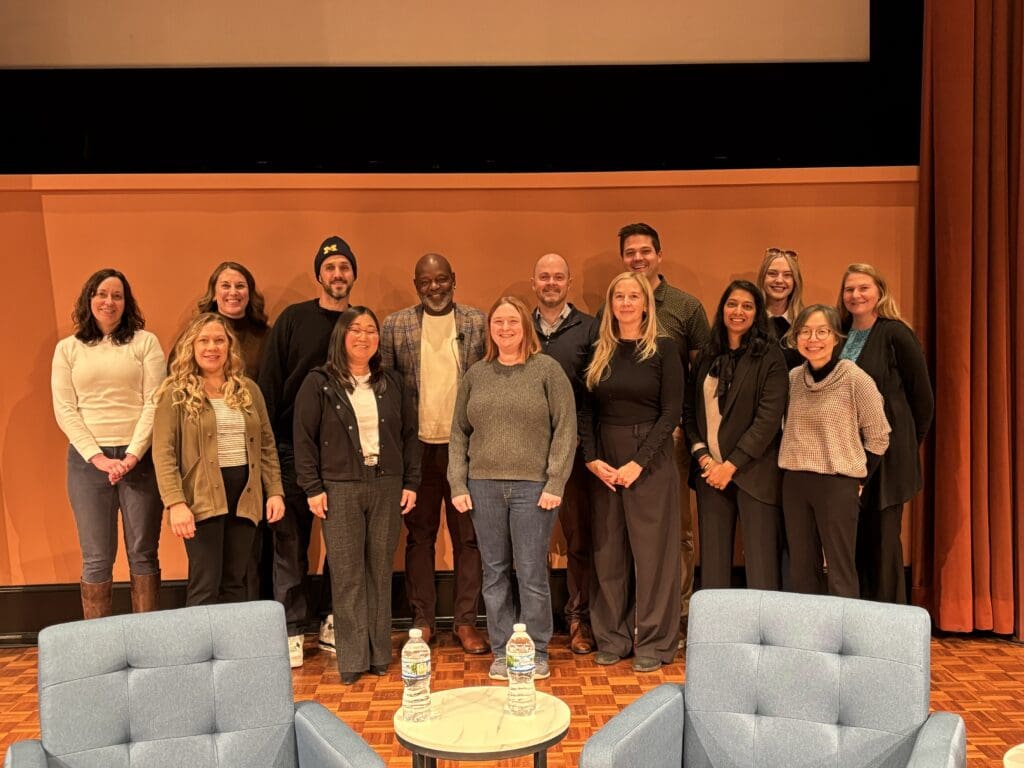
On November 11, the University of Michigan community gathered for a candid discussion on two of today’s most critical issues: mental health and opioid use.
The event, co-sponsored by Release Recovery, Emergent Biosolutions and the U-M Opioid Research Institute, featured Emmitt Smith, National Football League Hall of Famer; Zac Clark, Release Recovery founder and CEO; and U-M Public Health senior Shravya Ghantasala, co-president of The Lookout Project, a U-M student-led harm reduction organization.
Each panelist brought unique perspectives to the discussion, focusing on the stigma surrounding addiction, the importance of raising awareness of opioid overdose prevention and navigating the challenges of mental health and substance use on college campuses.
Key Takeaways
1. Open Communication Saves Lives
Emmitt highlighted the importance of talking about struggles—whether mental health stress, opioid risk, or simply the pressures students face. He encouraged the audience to recognize the signs of overdose and to build a culture of care and awareness. By communicating openly, we can break through isolation and stigma.
2. The Power of Community & Lived Experience
Zac shared from his own journey, underscoring how finding community was central to his recovery. He spoke frankly about how asking for help—and leaning on evidence-based resources—turned the tide for him. His message: you don’t have to walk the road alone, and reaching out is not a sign of weakness but of strength.
3. Evidence-Based Hope
Both speakers emphasized that recovery isn’t just about willpower—it’s about using tools and resources that are grounded in science. Zac encouraged attendees to engage with recovery options that are proven to work, and Emmitt echoed that point, calling on the audience to support access to those resources.
The University of Michigan Opioid Research Institute (ORI) isn’t just about academic research — it’s a bridge between the U-M community, people in recovery, and evidence-based solutions to the opioid crisis. As a centralized hub for research, education, and outreach, ORI plays a vital role in connecting individuals, families, and health professionals with resources, support, and community. Stay up to date on ORI news and events by signing up for our listserv
Listserv Sign Up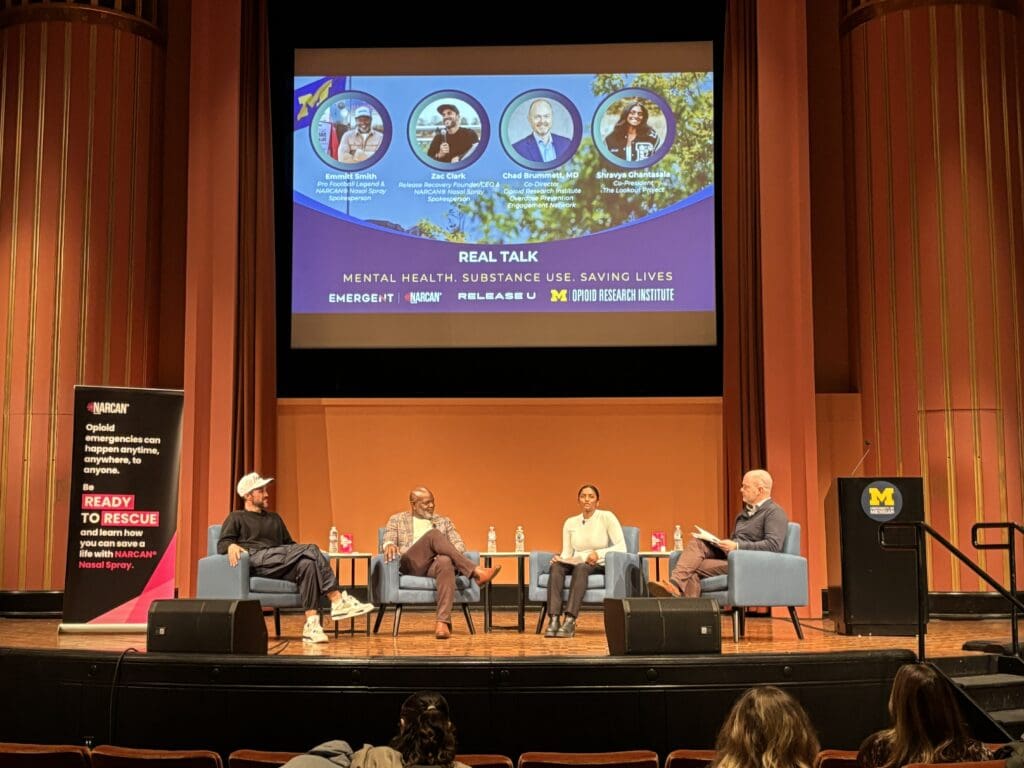
Media coverage of the event: